
Nothing in cart
Great service, very helpful team. My order arrived super quick and packaged well. Thanks again to the caravan plus team
1st order by Tony from WA
Find the right caravan cover, pop-top cover, camper cover or towing protection by matching the van body style, measured length, roof accessories and storage or travel job before ordering.
Shop Caravan CoversChoose the section that matches the van and the protection needed: full caravan cover, pop-top cover, camper cover, stone protection, wheel cover or cover repair.





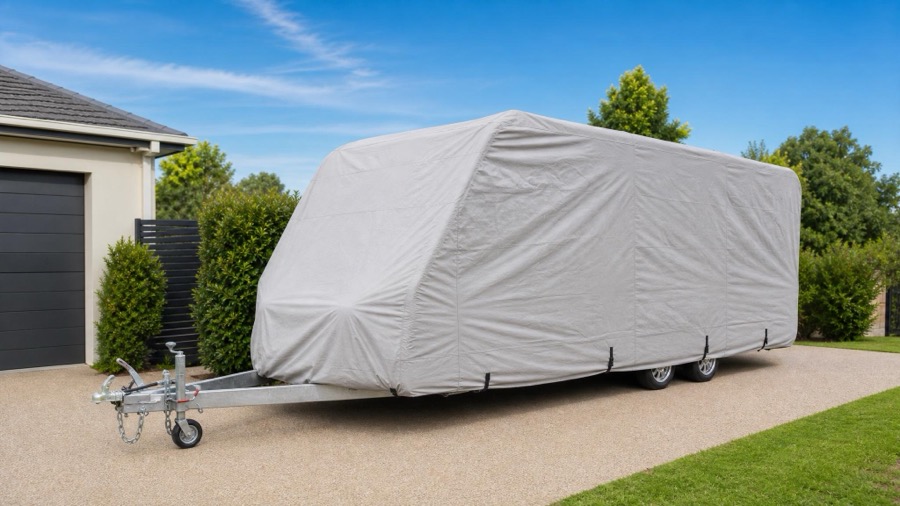
For a caravan storage cover, start with fit. Match the cover shape to the van body, measure the body length, then check roof gear, rear fittings and access zips before choosing the closest size.
Use full caravan covers for fixed-roof caravans, pop-top covers for lower pop-top vans, and camper trailer covers for camper trailers and similar lower bodies. A full caravan cover is not automatically a good substitute for a pop-top or camper cover because the height and shape can leave too much loose fabric.
If you store a pop-top with the roof raised, check the actual stored height and compare it with the full caravan cover range. The cover should sit firm enough to limit flapping, but not so tight that seams, zips or corners are under strain.
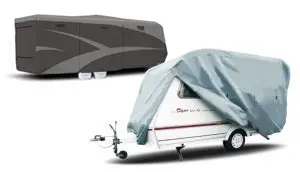
Most caravan covers are chosen by body length, not the total tow length. Do not include the drawbar or A-frame. Do check whether the rear bumper, spare wheel, ladder, toolbox or any fixed accessory needs to sit under the cover, because that can push you into the next size band.
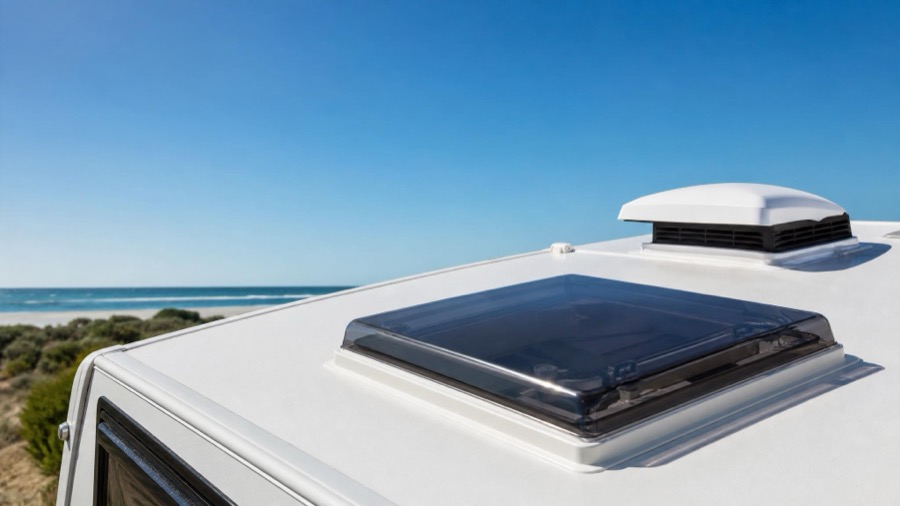
Roof air conditioners, vents, solar panels, antennas and roof racks also matter. They do not normally change the length band, but they can create rubbing points if the cover is too tight or if sharp edges are not protected. If your measurement is close to the top of a size range, choose the larger cover rather than stretching a smaller one.

A storage cover needs to block sun, dust, bird droppings, tree sap and general weather, but it also needs to breathe. A sealed tarp can trap moisture against the van and cause mould, mildew or finish problems. Most good caravan covers use a more water-resistant roof section with breathable side panels so trapped moisture can escape.
ADCO, Camec and Premier Platinum covers all suit this storage-cover job, but their size bands, access zips, fabric weight, warranty and fitting features differ. If you need regular door access while the van is covered, check the zip layout before choosing the brand and size.
Before fitting a cover, make sure the van is clean and reasonably dry. Dust, grit and loose fabric movement are what usually cause rubbing marks, especially around acrylic windows, corners and protruding fittings. Use the full caravan covers guide if you need more detail on measuring, fitting and choosing between brand ranges.

If the van is stored outside, a body cover is only one part of the protection job. Use wheel covers for tyre UV protection, especially when the van sits in one position for long periods.
For towing protection on highways, gravel roads and work sites, look at stone guards and towing protection, mudflaps, replacement mesh and mounting kits. If the storage cover is still sound but has a small tear, a cover repair kit may be enough instead of replacing the whole cover.
Use these paths to narrow the choice by what you are protecting: full caravan, pop-top, camper or motorhome, towing stone protection, or size measuring help.
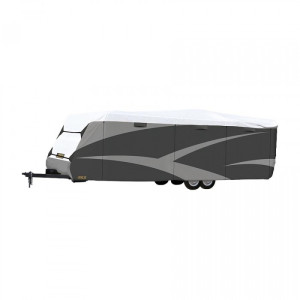
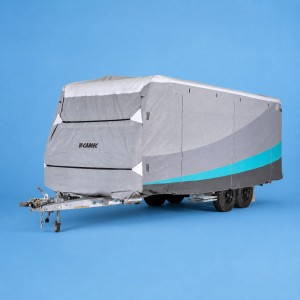
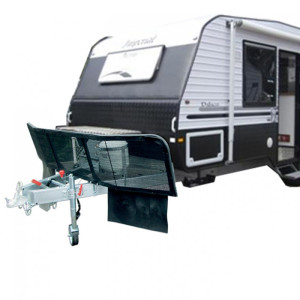
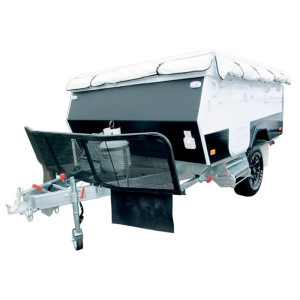
Most mistakes come from mixing up full caravan covers, pop-top covers, camper covers and towing protection. Choose by the van shape first, then confirm the size range and accessories.
| Cover choice | Best for | Brand and material checks | Check carefully |
|---|---|---|---|
| Full caravan covers | Full-height caravans stored outside or under partial cover where breathable protection from sun, dust and weather is needed. | Common options include ADCO Olefin HD, Camec, Camec Premium and Premier Platinum covers. | Measure body length, not overall drawbar length. Check roof accessories, awning, aerials and ladder/spare wheel clearance. |
| Pop-top and camper covers | Pop-tops, camper trailers and lower-profile RVs that need a different cover shape and height from a full caravan. | ADCO, Camec and Premier-style options cover common pop-top and camper size ranges. | Do not substitute a full caravan cover if the body height or roof profile is wrong. |
| Stone guards and towing protection | Protecting the van front, A-frame area or rear of the tow vehicle from stones and road spray while travelling. | Includes Coast stone shields, replacement mesh, mounting kits, mudflaps and Rock Tamers-style systems. | Width, A-frame setup, mounting points and replacement mesh/mudflap availability matter more than storage-cover sizing. |
Measure the van and check the cover range before ordering. A cover that is too small strains seams and zips; a cover that is too loose can flap and wear faster.
Brand and material choice matters because covers need to breathe, fit the body shape and survive Australian UV. Stone protection is a different job from storage covers.
| Cover or protection type | Use for | Check carefully | Best next step |
|---|---|---|---|
| ADCO caravan covers | ADCO Olefin HD covers, common full caravan, pop-top, camper and motorhome sizes. | Size range, roof accessories, straps and zip access need checking before ordering. | Start with caravan cover size bands. |
| Camec caravan covers | Camec standard and premium cover options across common caravan and pop-top lengths. | Premium and standard cover lines may have different size bands and features. | Start with Camec products and the cover guide. |
| Premier Platinum covers | Another premium cover option for common full caravan and pop-top sizes. | Stock and size availability vary, so confirm the exact size range before choosing. | Start with product pages and the comparison. |
| Stone guards and mudflaps | Towing protection for gravel roads and highway stone spray. | Width, mounting kit, A-frame shape, mesh and mudflap replacement parts need matching. | Start with stone guards and Coast/Rock Tamers products. |
| Wheel covers and repair kits | Tyre UV protection, spare wheel presentation and repairing small cover tears. | Tyre diameter and cover material must match the job. | Start with wheel covers and repair kits. |
If you already know the van body style, measure the body length and check roof accessories, storage conditions and whether you need storage protection or towing protection.
Helpful when you need help choosing cover size, material or brand before ordering.
Go straight to caravan covers, pop-top covers, camper covers, stone guards, wheel covers or repair kits.

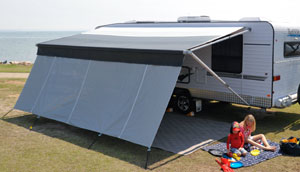
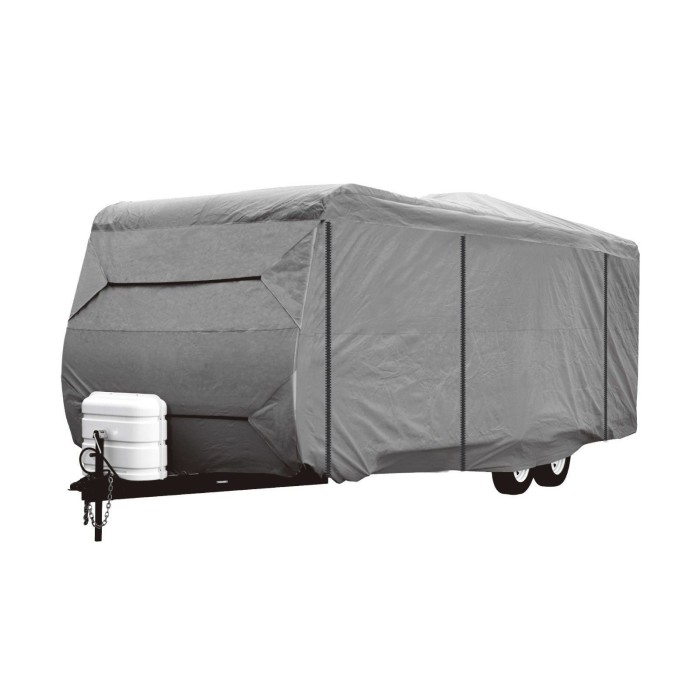
Measure the caravan body length and match it to the cover brand size range. Do not include the drawbar unless the cover instructions specifically say to. Also check roof accessories, awnings, ladders and spare wheels.
Most good caravan covers are weather resistant and breathable rather than a sealed plastic tarp. Breathability matters because trapped moisture can cause mildew, staining and finish problems.
No. Similar length labels can still have different metric ranges, shapes and features. Check the product size range before choosing between ADCO, Camec and other cover brands.
It is better to use a pop-top cover when the van body shape and height suit that path. A loose full-height cover can flap, wear faster and fit poorly.
No. Caravan covers are for storage protection. For towing protection, use stone guards, stone shields, mudflaps or similar front protection systems.
Choose the correct size, secure the straps, avoid sharp edges, pad protrusions where recommended and remove or protect items such as aerials where the cover instructions require it.

Great service, very helpful team. My order arrived super quick and packaged well. Thanks again to the caravan plus team
Good price, prompt delivery, but got the stong seals. Need old style Evakool 75 dual zone.
I am very happy with the service from Caravan Parts Plus, my order arrived before the specified delivery date, delivered to my door, in excellent condition and at very reasonable rates. My replacement hot water heater, although an upgraded model, fitted perfectly without any modifications. Couldn’t be happier.