
Nothing in cart




Very happy with sevice and promptness and the fact as we were travelling in the region we could pick our order up at the premises. Thank you
2nd order by Neil & Cleone from WA

For years, a handful of European manufacturers owned the conversation about caravan diesel heaters. Webasto, Eberspacher and Autoterm were shorthand for reliability, and their price tags reflected that pedigree.
Step inside a workshop today and you will hear a different story. Budget-friendly newcomers are matching the old guard on features and, in some cases, outpacing them on innovation.
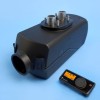
What changed? In short, Australian demand met global supply. Rising sales of off-grid vans created a hungry market, while improved quality control in Chinese factories delivered heaters that could finally survive the corrugations of the Oodnadatta Track. Brands such as AU Focus and its Jayco exclusive off-shoot Born To Roam now offer automatic altitude adjustment, stainless tanks and Bluetooth control for well under a thousand dollars, amenities that once required premium price tags.
Entry level no longer means compromise. Two seasons ago, many travellers viewed value-priced diesel heaters as disposable. Today, Melbourne-based AU Focus has 2kW and 5kW kits that bundle a stainless tank, silenced exhaust and two-year parts support for comfortably under four figures. Local stock of spare pumps, glow plugs and looms means owners can repair on the road instead of gambling on slow international freight.
Equally disruptive is the Born To Roam 2kW, commissioned by Jayco and built by AU Focus. Its Bluetooth controller, pre-loomed harness and compact form factor have already made it the default upgrade for Jayco campers wanting plug-and-play warmth without premium pricing.
These models show how far entry-level diesel heaters for caravans have come. Automatic altitude tuning, RCM compliance and local service support were once mostly premium features. Now they can arrive in the box.
For travellers who treat their van as a year-round residence, Latvian-built Autoterm 2D still offers a strong feature-to-dollar ratio. A brushless induction motor and quiet fuel metering pump are wrapped in a three-year warranty. It speaks volumes that many caravan manufacturers reserve Autoterm as their default fit-out.
The premium Germans remain the benchmark. Webasto's Air Top 2000 and Eberspacher's AS2/AS3 models still lead on diagnostics, vibration control and nationwide service coverage. What has changed is the value proposition: their premium now buys near-silence and rock-steady temperature modulation rather than basic functionality, because the fundamentals are present even at entry level.

Output versus volume. A 2kW diesel heater is a good match for pop-tops and single-room caravans up to about seventeen feet. A family bunk van or hybrid with a canvas annex may genuinely need 5kW of airflow. Oversizing is not harmless: short-cycling can lead to soot, and soot can become a warranty problem.
Altitude compensation. Most Australians never camp above two thousand metres, but if you do, make sure the heater can self-tune. Rich running at altitude can choke even a premium furnace.
Noise management. Brushless fans are fast becoming standard, yet fuel-pump ticking remains the number-one complaint on value heaters. Installing the pump on a gentle incline and isolating it with rubber grommets can reduce perceived noise, an easy fix that pays dividends every night.
Service and spares. A heater working flawlessly on a workshop bench is only half the story. A glow plug that lands in Perth overnight is what keeps a winter trip on schedule. This, more than any single specification, still justifies the higher entry price of Webasto and Eberspacher for many long-distance travellers.
Technicians agree on four golden rules. First, draw power straight from the battery with a correctly rated fuse; voltage drop through a distribution panel can trip the unit mid-start. Second, keep the exhaust run short and pitched slightly downhill to prevent condensation pooling at the muffler. Third, route the intake clear of road spray, as a single slug of water is enough to crack a glow-plug insulator. Finally, give every heater a "hot burn" at full power for fifteen minutes after extended low-speed operation, particularly if you are running low-sulphur diesel. Think of it as self-cleaning: the blast clears carbon and keeps the combustion chamber healthy.
The combustion intake and exhaust must stay outside the living area, and the exhaust outlet needs clearance from openings, plumbing, wiring and anything that can be heat damaged. If you are not confident with the fuel, exhaust, wiring or floor penetration work, use a qualified installer or auto electrician.
Before ordering, check the heater location, duct route, return-air path, fuel tank position, exhaust path and battery wiring run. A neat heater install is usually decided before the first hole is cut.
In practical terms, the gap between entry-level and premium heaters has narrowed to acoustics, diagnostics, and brand cachet. Budget kits now boast features once reserved for the Germans, while European manufacturers have responded with longer warranties and even quieter hardware.
The result is a buyer's landscape where almost every price point can deliver dependable, condensation-free comfort when the heater is selected and installed properly. Your decision comes down to van size, service reach, noise tolerance, installation confidence and how much brand heritage you are willing to pay for.



Very happy with sevice and promptness and the fact as we were travelling in the region we could pick our order up at the premises. Thank you
Great service
Fantastic service by the lady who answered the phone she couldn't do enough for me. The parts arrived quite quickly.