
Nothing in cart





Very happy with sevice and promptness and the fact as we were travelling in the region we could pick our order up at the premises. Thank you
2nd order by Neil & Cleone from WA

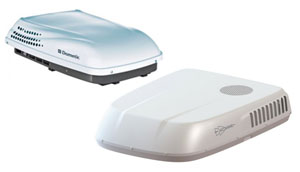
The original FreshJet 7 (now referred to as FJX) replaced the long-standing Harrier and Ibis range - and it didn’t disappoint.
The move to inverter compressor technology was a genuine step forward, delivering quieter operation, better efficiency, and quickly making it the go-to rooftop air for most vans.
The new FreshJet FJZ builds on that same platform, but shifts the focus to how people are actually travelling now.
More lithium. More solar. More time spent off-grid.
At a glance, it looks familiar. Same footprint, same install, same overall concept. But underneath, it’s been reworked to be more efficient, more controllable, and better suited to managing your own power.
It’s not a complete reset - it’s a continuation of what the FreshJet 7 started, just better aligned to off-grid use.
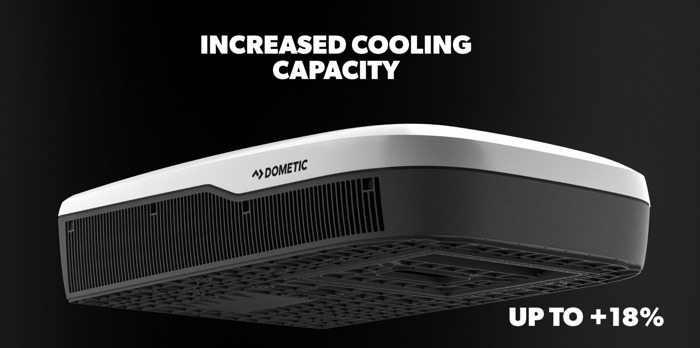
On paper, the changes are straightforward - more cooling, less power draw, and lower noise.
But this time it’s not just incremental. The gains come from larger heat exchangers, updated fan motors, and better control of how the system runs under load.
The results are faster pull-down in the heat, less strain on your power system, and a smoother, more consistent operation over longer run times.
If you’ve used the FreshJet 7, this feels like a refined version of the same platform - just working more efficiently across the board.
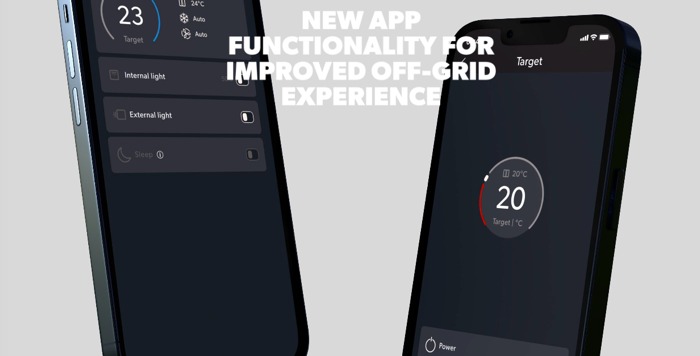
This is the one that really separates the FJZ from the previous generation.
You can now set a maximum current draw for the air conditioner, directly through the app.
Instead of the system pulling whatever it needs, it will cap its demand and adjust output to stay within that limit.
This means you can now match your air conditioner to your power system. If you’re running lithium, you can dial the current back to extend runtime and avoid overloading your inverter. When you’ve got mains power available, you can let it run at full capacity.
There’s still a trade-off. Reducing current reduces cooling output. But the key difference is that it’s now controlled and predictable, rather than all or nothing.
It turns rooftop air conditioning into something you can actually manage off-grid in a meaningful way.
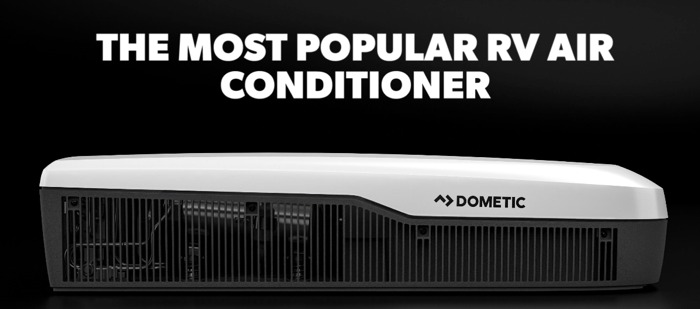
The overall structure of the range remains the same. There’s still a clear progression from entry-level through to high output.
| Model | Cooling | Heating | Weight | Inverter |
|---|---|---|---|---|
| FJZ 4 Essential | 2.2 kW | 1.0 kW | 34.3 kg | No |
| FJZ 7 Lite | 3.0 kW | 2.3 kW | 34.4 kg | Yes |
| FJZ 7 Pro | 3.4 kW | 3.0 kW | 41 kg | Yes |
| FJZ 7 Plus | 4.0 kW | 3.4 kW | 43.6 kg | Yes |
Before ordering, check the existing air conditioner opening, roof space, roof strength, ceiling assembly, 240V supply, and how much current your inverter or generator can comfortably provide. Cooling output matters, but a unit that suits the van and the power system will be easier to live with.
If you are replacing an older Dometic, Ibis, Harrier, or FreshJet unit, confirm the model label and the ceiling assembly before assuming every part will swap straight over. If you are not confident with the electrical side, use a licensed electrician or caravan repairer.
At the lower end, the Essential model isn’t new as such - it’s the same proven platform, now brought under the FJZ naming to align with the rest of the range. It uses a fixed-speed compressor rather than inverter technology, which simplifies the system and brings the price down.
| Performance | FJZ 4 Essential |
|---|---|
| Cooling Capacity | 2.2 kW |
| Cooling Current | 4.62 A |
| Heating Capacity | 1.0 kW |
| Heating Current | 4.7 A |
| Weight incl. ADB | 34.3 kg |
| Inverter Technology | No |
| Recycled Materials | 50% PCR ABS basepan / 70% PCR ABS shroud |
| Key Positioning | A simpler, more affordable FreshJet option for smaller vans and budget-conscious buyers. |
The Lite is the more compact and lightweight option, making it a better fit where roof space, weight, or overall size is a consideration. The choice isn’t really about budget - it’s about size and application.
| Performance | FJZ 7 Lite | Previous FJX | Difference |
|---|---|---|---|
| Cooling Capacity | 3.0 kW | 2.537 kW | +18% |
| Cooling Current | 5.8 A | 6.9 A | -16% |
| Heating Capacity | 2.3 kW | 2.285 kW | +1% |
| Heating Current | 4.2 A | 4.7 A | -11% |
| Airflow (Cooling) | 431 m³/h | 434 m³/h | -1% |
| Airflow (Heating) | 460.88 m³/h | 451 m³/h | +2% |
| Noise - Sleep Mode | 43.1 dB | 45.9 dB | -6% |
| Noise - Low Fan | 38.4 dB | 47.0 dB | -18% |
| Noise - Medium | 39.3 dB | 47.3 dB | -17% |
| Noise - High | 46.2 dB | 56.4 dB | -18% |
| Noise - Turbo | 50.6 dB | 58.2 dB | -13% |
| IP Rating | IPX5 | IPX4 | Improved |
| Key Upgrade | More cooling, lower current draw, and noticeably less noise than the previous FJX, while keeping weight about the same. | ||
Figures based on manufacturer comparison data between FJZ and previous FJX models.
The Pro sits right in the middle as the all-rounder. It balances performance, noise, and price, making it a strong fit for mid-sized vans and general touring where you want good cooling without stepping up to the largest unit.
| Performance | FJZ 7 Pro | Previous FJX | Difference |
|---|---|---|---|
| Cooling Capacity | 3.4 kW | 2.91 kW | +17% |
| Cooling Current | 6.2 A | 7.3 A | -15% |
| Heating Capacity | 3.0 kW | 2.69 kW | +11% |
| Heating Current | 5.8 A | 5.9 A | -2% |
| Airflow (Cooling) | 491 m³/h | 491 m³/h | No change |
| Airflow (Heating) | 508 m³/h | 491 m³/h | +3% |
| Noise - Sleep Mode | 41.9 dB | 47.2 dB | -11% |
| Noise - Low Fan | 40.5 dB | 47.4 dB | -15% |
| Noise - Medium | 41.5 dB | 48.2 dB | -14% |
| Noise - High | 48.2 dB | 49.3 dB | -2% |
| Noise - Turbo | 51.4 dB | 58.4 dB | -12% |
| IP Rating | IPX5 | IPX4 | Improved |
| Key Upgrade | Dual-axis compressor mount reduces vibration and noticeably smooths compressor noise. | ||
Figures based on manufacturer comparison data between FJZ and previous FJX models.
At the top end, the Plus moves into true high-output territory. With up to 4.0 kW of cooling, it’s a genuine step up from the previous generation and positions itself as one of the most powerful rooftop units available, suited to larger vans and hotter conditions.
| Performance | FJZ 7 Plus | Previous FJX | Difference |
|---|---|---|---|
| Cooling Capacity | 4.0 kW | 3.4 kW | +18% |
| Cooling Current | 6.89 A | 7.8 A | -12% |
| Heating Capacity | 3.4 kW | 2.903 kW | +17% |
| Heating Current | 6.43 A | 6.44 A | 0% |
| Airflow (Cooling) | 542 m³/h | 496 m³/h | +9% |
| Airflow (Heating) | 553 m³/h | 504 m³/h | +10% |
| Noise - Sleep Mode | 40.9 dB | 46.4 dB | -12% |
| Noise - Low Fan | 41.0 dB | 46.2 dB | -11% |
| Noise - Medium | 41.2 dB | 47.97 dB | -14% |
| Noise - High | 49.5 dB | 50.4 dB | -2% |
| Noise - Turbo | 51.1 dB | 59.13 dB | -14% |
| IP Rating | IPX5 | IPX4 | Improved |
| Key Upgrade | The headline model in the range, with the biggest gains in outright cooling, heating, airflow, and overall refinement. | ||
Figures based on manufacturer comparison data between FJZ and previous FJX models.
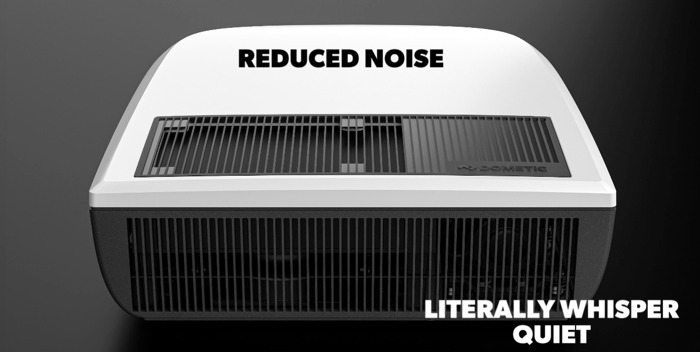
Beyond the core improvements, the FJZ range picks up a number of smaller upgrades that make it easier to live with day to day.
The FreshJet 7 set the benchmark when it arrived, and the FJZ builds on that foundation while shifting the focus to how people are actually travelling now.
More control. Better efficiency. Less noise.
And for off-grid setups, those gains make a real difference.
From there, it really comes down to matching the air conditioner to the size of the van and how you travel.
The FJZ Essential is the simple, fixed-speed option - a more affordable, no-fuss unit that still delivers reliable performance.
Step up to the FJZ Lite and you get inverter efficiency in a compact, lightweight package, making it a strong fit where space or weight is a factor.
The FJZ Pro sits right in the sweet spot - a well-balanced all-rounder for mid-sized vans, combining solid performance with noticeably improved comfort and reduced noise.
And at the top of the range, the FJZ Plus delivers outright performance, with industry-leading output designed for larger vans and tougher conditions.
At a glance, the range looks familiar. But once you spend time with it - especially off-grid - the improvements are easy to appreciate.





Very happy with sevice and promptness and the fact as we were travelling in the region we could pick our order up at the premises. Thank you
Great service
Fantastic service by the lady who answered the phone she couldn't do enough for me. The parts arrived quite quickly.