
Nothing in cart



So accommodating with my request, quick response and follow up on the tracking of the product, will definitely be my go to for my next caravan update 😊
1st order by Fiona from VIC
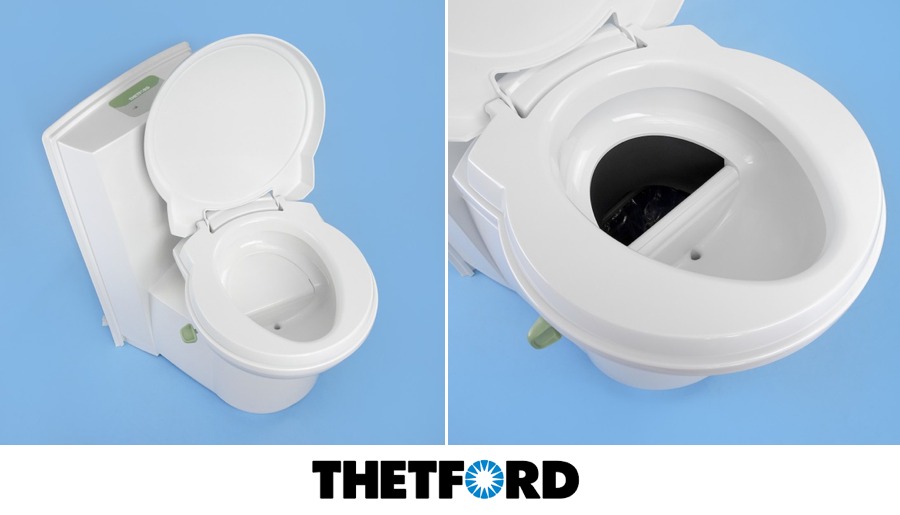
It’s not something most people think about - until it starts dictating how and where you travel.
For years, cassette toilets have been the standard in caravans. They’re simple, reliable, and for many setups, they just work. But they come with one trade-off that becomes more noticeable the longer you’re on the road: you’re tied to dump points.
That’s fine if your trips revolve around powered sites and established parks. Less so if you’re trying to stay longer, free camp, or avoid planning around facilities.
That’s where the separation toilet range from Thetford comes into its own.
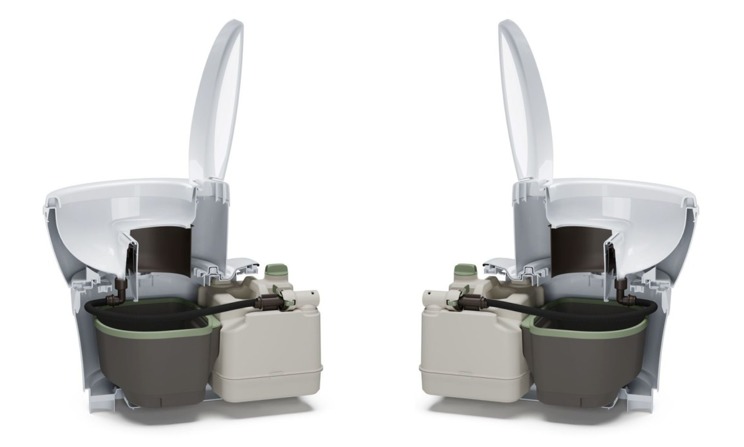
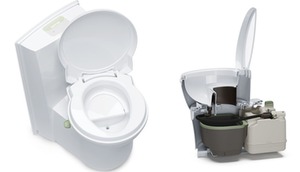
At its core, the system is doing one simple thing - keeping liquid and solid waste separate.
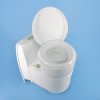
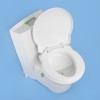
You don’t notice much difference in how it feels to use. The layout is familiar, the seating position is the same, and the footprint stays close to what most caravans are already designed around.
The difference comes afterwards - and in what’s no longer needed.
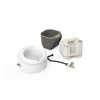
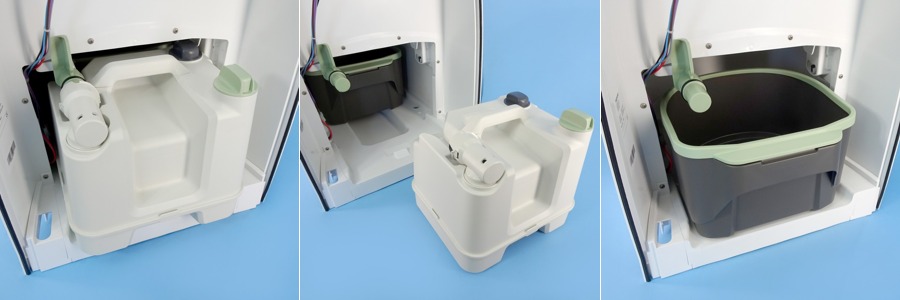
There’s no flush water, and no chemical mix sitting in a single tank. Liquids are directed into a sealed rear-mounted container, while solids are collected separately in a lined compartment.
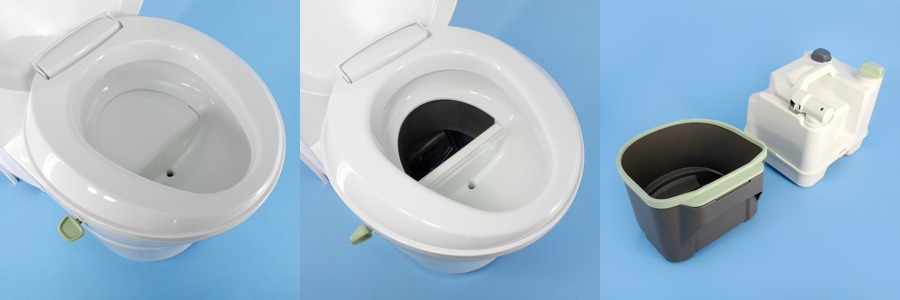
On the Thetford units, the urine tank is around 7.5 litres, roughly 7-8kg when full. It’s small enough to lift and carry comfortably, but large enough that you’re not constantly dealing with it.
Because it’s separate, it’s emptied more regularly, without needing to find a dump point.
Solids are handled less often. With no liquid mixing in, odour is reduced and the contents remain more stable, so there’s less urgency to deal with them.
This is where the routine changes.
With a cassette, everything builds up together and gets emptied in one go at a dump point.
With a separation system, liquids become a smaller, regular task, while solids sit in the background and are dealt with far less often. The smaller tank size keeps things manageable, and once you get into the rhythm, it becomes second nature.
Up until recently, moving to a separation toilet meant taking on a few compromises.
Price was one of them. These systems were often positioned well above standard cassette toilets, which made them hard to justify unless you were fully committed to off-grid travel.
The other was complexity.
Most separation toilets required a completely different installation - different footprint, different mounting, and often losing the convenience of a rear service door. On top of that, many setups relied on dedicated ventilation systems, with fans, ducting, and external vents that needed to be planned into the van. It worked, but it added another layer most people didn’t want to deal with.
For many caravans, it simply wasn’t a straightforward swap.
That’s where Thetford have taken a different approach.
With models like the Thetford S220 and Thetford S260, the focus has been on removing those barriers rather than adding to them.
The footprint stays in line with existing cassette toilets. The same cut-out, the same mounting position, and the same rear service door access are retained. That means you’re not redesigning your bathroom just to change how the system works.
Ventilation is also handled more simply. Rather than needing to build a system from scratch, there are purpose-built ventilation kits designed to integrate with the toilet, keeping things contained without complicating the install.
At the same time, pricing has come back within reach of what most caravanners are already familiar with - especially when using conversion kits rather than replacing the entire unit.
What was once a niche upgrade now feels like a practical alternative.
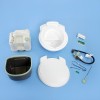
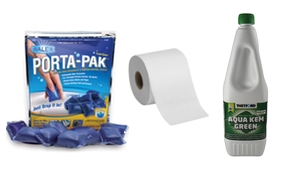
This practicality is supported by a full range of accessories built around separation systems - waste bags, tank treatments, ventilation kits, and cleaners. None of it is complicated, but it all works together to keep things contained, clean, and easy to manage over time.
If you are replacing a cassette toilet in a tight bathroom, check more than just the cut-out and service door. Measure the bowl position, swivel clearance, cupboard-door clearance, and the space in front of the bowl when it is turned for use and when it is turned away.
This matters most where the toilet is built into cabinetry or the bathroom door closes close to the front of the bowl. Use the Thetford model dimensions and your existing toilet label before assuming the replacement will clear every door, wall and cupboard face.
This is usually the first question people ask once they understand how a separation toilet works.
The answer is fairly simple, but it helps to look at liquids and solids separately.
Urine should be treated as toilet waste, not grey water.
The preferred option is to empty the urine container into a regular flushing toilet, RV dump point, or approved toilet waste facility. Thetford’s own guidance states that urine from a separation toilet can be poured into any regular toilet.
In remote areas, the closest comparison is normal bush toileting. Where bush toileting is permitted and no facilities are available, small amounts of urine may theoretically be dispersed using the same low-impact principles: well away from waterways, campsites, tracks, roads, drains and sensitive vegetation, and spread broadly rather than tipped in one spot.
This should only be treated as a last-resort option. Local park, council, campground and land-manager rules always take priority.
Solid waste from a separation toilet is usually collected in a liner bag.
These are separation toilets, not composting toilets. Do not treat the bagged solids as compost unless the toilet system, local rules and your waste-handling setup specifically allow it.
The preferred disposal method is to seal the bag properly and dispose of it with general waste, where local rules allow. This is similar to how other sealed hygiene waste is handled, such as nappies, incontinence products, sanitary waste or dog waste bags.
This can feel like the biggest mental hurdle at first, but in practice it is simply a sealed waste bag going into the appropriate bin. You also do not need to wait until the container is heavily used before disposing of it. If you are more comfortable sealing and removing the bag more frequently, that is perfectly reasonable and can make the whole process feel cleaner and easier to manage.
Do not place waste bags in drop toilets, pit toilets, dump points, recycling, green waste or compost bins.
So the simple rule is this: urine can usually go into a toilet, dump point or approved facility. Sealed solid waste usually goes into general waste. When in doubt, carry it out.
A separation toilet will not be the right answer for every caravan setup.
If you mainly stay in caravan parks, take shorter trips, or are happy with the familiar routine of a cassette toilet, there is no real need to overcomplicate it. A cassette system is simple, proven, and still makes a lot of sense for many travellers.
Where the Thetford separation toilet range starts to stand out is for those who spend more time away from facilities, want to reduce water use, or prefer a toilet setup that does not rely so heavily on regular dump point stops.
By separating liquid and solid waste, the system helps reduce odour, keeps waste easier to manage, and gives you more flexibility in how each part is dealt with.
For off-grid touring, remote travel, or anyone rethinking how their van is set up, that is the real advantage.
It is not about changing how you use your caravan.
It is about reducing how often your toilet setup dictates where you need to stop.


So accommodating with my request, quick response and follow up on the tracking of the product, will definitely be my go to for my next caravan update 😊
Parts took a while due to supplier issues - however, Caravan Plus kept me updated during the whole process and I successfully received my parts in good order. Although my order was small and inexpensive, I felt like they handled it with as much importance as a large scale order. Nice to see this level of service still exists. Well done Caravan Plus.
Very quick delivery and exactly what was needed!