Nothing in cart



Fast, efficient and prompt delivery
1st order by John from QLD
The most common caravan water pump faults are not pump failures. They are usually loose fittings, air leaks on the suction side, blocked strainers, low voltage, restrictive plumbing, or a valve that is not sealing properly.
Work through the checks in order. A pressure pump needs a clean water supply, no air leaks before the pump, good 12V power, and a plumbing system that can hold pressure after the taps are closed.
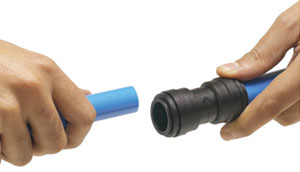
Before replacing parts, check the obvious things. Travel vibration can loosen pump screws, hose tails, clamps and John Guest fittings. A fitting that only leaks air can stop the pump priming without leaving water on the floor.
If the pump has not been used for a long time, it may hum without moving water. Confirm the suction line is full of water, clean the strainer, close all taps, and let the pump build pressure. Do not let a dry pump run for long periods.
If the pump is silent, treat it as an electrical fault first.
Some pumps can be tested by bypassing the pressure switch, but only do this if you are confident with 12V wiring. If not, use an auto electrician or caravan repairer.
If the pump runs but only splutters, the problem is usually before the pump. The pump cannot build pressure if it is pulling air instead of water.
Air in the hot water service can also make the system splutter. Follow the hot water system manual for filling and bleeding the tank before assuming the pump is faulty.

A short "brrp" after the tap is closed usually means the pump is trying to settle the pressure. If it keeps happening, or it happens every few minutes with all taps closed, the system is losing pressure somewhere.
Some pumps have pressure or bypass adjustments, but do not keep winding screws to chase a cycling fault. Use the pump manual and treat adjustment as the last step after leaks, restrictions, voltage and air have been checked.
If the pump keeps running after every tap is closed, it is not reaching shut-off pressure. That can be caused by a leak, an open valve, an internal pump valve fault, air in the system, or low voltage.
Many pumps are fitted under a bed, cupboard, dinette seat, service hatch, or near the tank or hot water service. There is no single location across all caravan brands, so follow the sound of the pump and trace the hose from the tank if you cannot see it immediately.
If mains water is filling the tank, coming out of the filler, or flowing back through the pump, the system has a backflow fault. The mains supply should not be able to push water backwards into the tank.
Common causes are debris in a one-way valve, a failed non-return valve in the mains inlet, an incorrectly plumbed pump bypass, or a pump valve that is no longer sealing. Clean the affected valve if it is serviceable, and replace it if it will not seal reliably.
A regulated mains inlet helps protect the van from high park-water pressure, but it still needs the correct check-valve layout. If the tank fills while connected to mains water, disconnect mains pressure until the fault is repaired.
Caravan pumps make some noise, but heavy vibration or a hammering sound usually means the pump is hard-mounted, starved of water, pulling air, or connected to rigid plumbing that carries vibration through the van.
Not every water fault is caused by the main pressure pump. Thetford cassette toilet flush pumps and valves can be separate from the main caravan pump, depending on the toilet model. If the toilet flush is weak or not working, check the Thetford model instructions, the toilet fuse or reed switch, and whether the small flush pump impeller is stuck after storage. Disconnect power before servicing it.
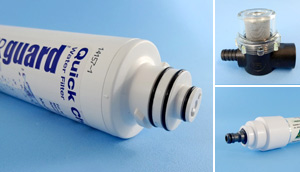
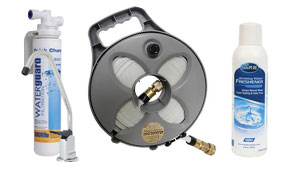
Water filters can also confuse pump diagnosis. A fine filter, purifier, or small filter tap outlet can be too restrictive for a pressure pump and may cause pulsing, slow purge time, or repeated cycling. For drinking water filtration, it is usually better to run the filter on a separate line rather than filtering every litre of water used in the van.
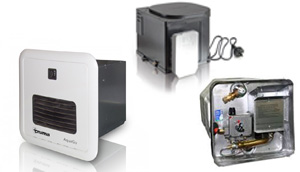
Hot water systems can introduce another trap. Anode particles, scale or debris can block strainers, tap cartridges, non-return valves, filters, or fittings on the hot side. If cold water works but hot water is weak or blocked, flush the hot water system and clean the affected fittings before blaming the pump.
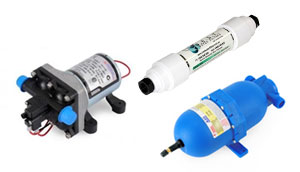
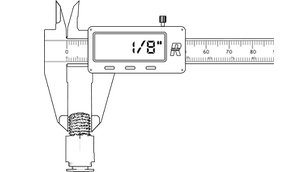
For replacement pumps, strainers, fittings and filters, start with the matching pump pressure and hose size rather than only the brand name.