
Nothing in cart
Very quick delivery and exactly what was needed!
1st order by Bianca from SA
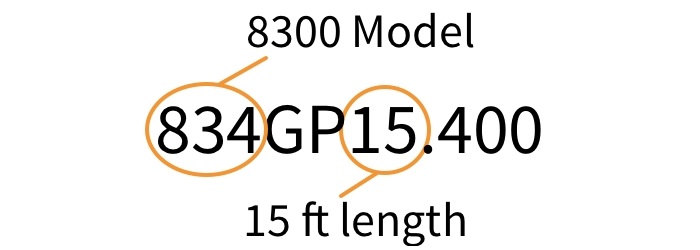
To identify a Dometic roll-out awning, start with the model label if it is still readable. If the label is missing, roll the awning out and compare the roller end, shaft and cap style. The older Dometic A&E roll-out range is commonly identified as 8300, 8500 or 9000, while the newer manual roll-out replacement range is the 8700.
For replacement fabric or a fabric-on-roller, measure from the centre of one awning arm to the centre of the other arm. Do not measure the exposed vinyl fabric only. The arm-centre measurement is the size used for Dometic roll-out awnings.

The model number is often on a sticker or label near the roller, end cap or awning hardware. You may need to roll the awning fully out to see the label on the roller end. Look for numbers starting with model families such as 8300, 8500, 8700, 9000 or 9100.
If the sticker is gone, keep any part numbers you can find on the arms, end caps, torsion assembly, motor or roller. They may not identify the whole awning by themselves, but they can help narrow the spare-parts diagram.

The roller end is the best visual clue when the label is missing. The older 8300 has a hollow roller shaft with a larger outside diameter. The 8500 and 9000 use a smaller solid shaft with the cap attached to the shaft.

| Model | Main identification clue | Notes |
|---|---|---|
| 8300 | Hollow roller shaft, about 18.5mm outside diameter | Older torsion repairs can become uneconomical if both sides need converting |
| 8500 | Solid smaller shaft, cap attached to shaft | Many 8700 parts and hardware items suit or retrofit |
| 9000 | Similar roller end to 8500, with aluminium weather shield sections on the fabric | Now obsolete, but many service parts cross over with 8500/8700 style parts |
| 8700 | Current manual roll-out replacement range | Can often be used with existing 8300/8500 hardware, subject to the specific repair |
Dometic 8300 awnings use a hollow roller shaft. If you are trying to identify an old A&E or SunChaser awning, this hollow shaft is the quickest visual check.

Dometic 8500 awnings use a smaller solid shaft and the cap that holds the roller to the top of the arms is attached to the roller shaft.

Dometic 9000 awnings have the same solid roller shaft and attached cap style as the 8500. The key difference is the aluminium sections on the first part of the canopy, which protect the fabric from the sun when the awning is rolled up.

The 8700 is Dometic's current manual roll-out awning range and is used as the replacement path for many older 8300 and 8500 setups. Hardware sizes are based on the available wall height and main arm length.


The 8700 roller can be used with many existing 8300/8500 hardware setups, but repairs involving torsion springs need more care. For some 8300 torsion repairs, replacing one spring may not be economical because the newer spring/top-cap style may require both sides to match.
For Dometic roll-out awnings, measure from the centre of one awning arm to the centre of the other awning arm. Do not measure the vinyl fabric only, and do not include the external shaft ends.

If your measurement is close to a foot size, convert carefully and round to the awning size, not the vinyl size. For example, a centre-to-centre measurement around 5475mm is about an 18ft awning.
Once you know the model and size, use the matching Dometic awning category or diagram. For a broken lever, slider, rafter, arm, torsion spring or end cap, the model family matters. For fabric or fabric-on-roller replacement, the arm-centre size matters most.
If you have a Dometic power awning such as a 9100 or 9700, use the power-awning parts path rather than the manual 8300/8500/8700 guide. Power awnings can share some appearance cues, but motors, controls and hardware are different.







Very quick delivery and exactly what was needed!
Wonderful experience! They had what we needed and it arrived quickly. Thank you.
Great as usual, thanks.