Most caravans and trailers use Holden or Ford bearings, while some larger and offroad vans use parallel bearing sets. The terms standard bearings and Holden bearings mean the same thing. The terms slimline bearings and Ford bearings are also interchangeable.
The simplest way to identify your bearings is from the code printed on the bearing cone. If the number is readable, use that before relying on axle measurements.
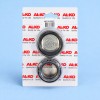
If possible, identify your bearing by the number on the cone. A bearing kit will include the parts shown for one wheel.
Having Trouble Reading The Bearing Number?
If the bearing number is worn or unreadable, measure the existing bearing internal diameter or the axle spindle shoulders. Use a vernier caliper where possible, because small differences matter with wheel bearings.
Bearing style
Inner shoulder / spindle
Outer shoulder / spindle
Typical axle rating
Holden / standard
31.75mm
19.05mm
750kg per pair of wheels
Ford / slimline
35mm
22mm
1450kg per pair of wheels
Parallel
L68149/L68110 both sides
L68149/L68110 both sides
1600kg per pair of wheels
2 tonne kit
50mm
31.75mm
Large axles only
2. Why There Are Different Bearings
The requirement for different bearings is due to different load carrying capacity. More weight to be carried means a thicker axle and larger diameter bearings.
A bearing kit will contain all components required for one wheel. A bearing is made up of two parts: the cup, which is pressed into the hub, and the cone, which contains the rollers. The smaller cup and cone are called the outer bearings because they fit the outside face of the wheel with the grease cap. The grease seal and inner bearings go on the inside toward the centre of the trailer or caravan.
The hubs can be either non-braked or braked and can be used with Ford, Holden or other bearing kits.
Quality can vary between brands. At Caravans Plus you can be assured we only sell quality bearings. The relatively small price difference can in no way compensate for the problems of a failed bearing.
We also sell some individual components, as it is recommended to replace a seal after re-greasing.
3. Holden Bearings
Holden bearings are rated for 750kg for each pair of wheels, or axle. The 39mm round section and 40mm square section solid steel axles are manufactured to suit the Holden bearings that sit on the 31.75mm shoulder for the inner bearing and the 19.05mm shoulder for the outer bearing of the axle spindle.
If you cannot read the bearing number, check the internal diameter of your existing bearing. The same size spindle may be used on offset axles and independent suspension systems.
This diagram shows a spindle, a brake hub and the components for a Holden bearing kit.
Ford bearings are rated for 1450kg for each pair of wheels, or axle. The 45mm or 50mm solid steel axles are manufactured to suit the Ford bearings. These bearings sit on the 35mm shoulder for the inner bearing and the 22mm shoulder for the outer bearing of the axle spindle.
If you cannot read the bearing number, check the internal diameter of your existing bearing using a vernier caliper. The same size spindle may be used on offset axles and independent suspension systems.
This diagram shows a spindle, a brake hub and the components for a Ford bearing kit.
Parallel bearings are generally considered superior for off-road usage with a rating of 1600kg per pair. The same sized bearing, L68149/L68110 or Ford inner, is used on both sides of the hub.
This diagram shows a spindle and the components for a parallel bearing kit.
These are fitted to larger axles than above, with the inner bearing matching an axle spindle diameter of 50mm, and the outer bearing going over a 31.75mm shoulder.
There are plenty of videos on YouTube that show how to inspect and repack your trailer or caravan wheel bearings. We suggest you do this each year, and replace bearings if they are worn, noisy, damaged, rusty or heat-marked. If travelling in remote areas, you should always carry at least one spare set of bearings and some grease.
One typical cause of bearing failure is towing while the trailer hand brake is engaged. This causes the grease in the bearings to overheat, and the bearings must be checked.
A quick check with your hand for heat at the hubs should be carried out after you have travelled for 30 minutes or so on your first day's travel. It takes just a moment and can save a wheel coming off and all the trouble that can cause.
Before Refitting The Hub
Use clean bearing grease suitable for wheel bearings and pack the bearing, not the whole hub cavity full of grease.
Keep grease away from brake linings and braking surfaces. If grease gets inside a drum, clean it properly before reassembly.
Replace the grease seal after removing or re-greasing the hub.
Use a new split pin where possible. If a split pin is reused in an emergency, make sure it is sound and both ends are bent securely through the castellated nut.
Do not overtighten the axle nut. Adjust it to the axle or hub manufacturer's method so the wheel turns freely without excess play.
If you are not confident checking bearing condition, setting the axle nut or confirming brake cleanliness, use a trailer repairer or mechanic. Wheel bearings are a safety item.