Nothing in cart





Great product shipped very fast
3rd order by Troy from QLD
There's nothing quite like pulling up somewhere remote, setting up camp, pouring yourself a glass of water, and then hesitating after the first sip.
If you've been caravanning for a while, you'll know exactly what I mean. That slightly off taste. Sometimes it's plastic, sometimes it's stale, and sometimes it's just plain unpleasant. The frustrating part is it's rarely just one cause.
Most caravan tanks are made from food-grade polyethylene, which is suitable for drinking water, but that doesn't mean it's immune to taste issues. Over time, a bit of biofilm can build up inside the tank or lines. If you've used a standard garden hose to fill up, there's a good chance you've introduced a bit of chemical flavour along the way. Then add heat, a bit of time sitting still, and whatever minerals are in the local water supply, and you've got water that may be clear but still not something you're keen to drink.
If the water looks dirty, smells strongly, has been sitting for a long time, or you are not confident the source was potable, do not rely on taste fixes alone. Drain, clean and flush the system before drinking from it, and use bottled water until you are comfortable the system is clean.
Over the years, I've tried just about every fix. Bottled water works, but it's expensive and takes up space. Tank additives can help, but they can feel like a bit of a science experiment. Whole-of-system filters sound good in theory, but you end up using filter life on your shower and dishes rather than the water you actually drink.
What I've found, and what we see more and more now, is that the best approach is actually much simpler. Filter only what you drink.
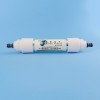
For most touring setups, that means a small under-bench filter that taps into your cold water line and feeds a separate drinking tap. It's one of those upgrades that just quietly does its job. You're filtering only the water you drink rather than treating the entire tank. Start with potable water and keep the tank and lines clean; a taste filter does not remove the need to check source-water quality.
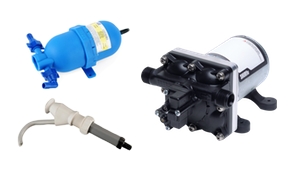
The SHURflo Waterguard kit uses a carbon filter and dedicated spout to improve the taste and odour of potable drinking water. Its instructions warn not to use it with water that is microbiologically unsafe or of unknown quality without adequate disinfection before or after the unit. Filtering does not replace that disinfection or make an unsafe source suitable for drinking.
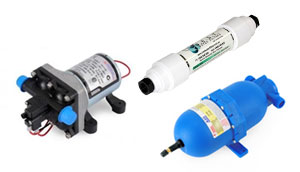
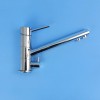
What's changed more recently is the way newer vans are set up. A lot now come fitted with 3-way mixer taps, and that's made things even easier. Instead of adding another tap, you can run a compact inline filter straight into the existing mixer. No extra holes, no extra clutter. It's a much cleaner install, and for most modern layouts, it's the better option.
This style of system keeps everything neat while still giving you filtered water on demand. It's a simple upgrade, but it makes a noticeable difference to taste and usability day-to-day.
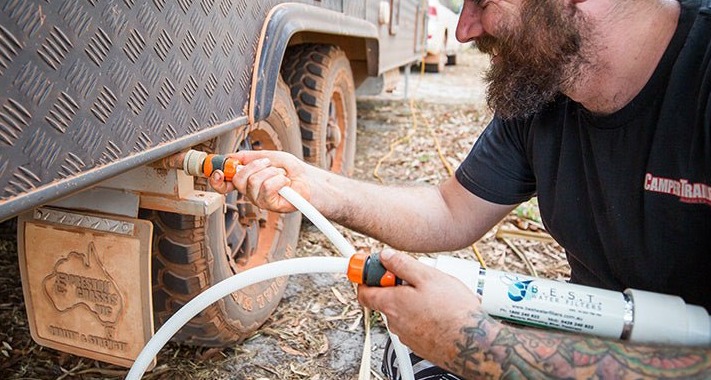
Then there's the other end of the spectrum: onsite vans or longer stays where you're connected to mains water. In those situations, a basic inline hose filter still does a good job. It filters everything before it even enters your van, which can help reduce sediment, taste and odour before the water reaches the tank and plumbing.
They can help reduce sediment, taste and odour from a potable supply, but do not assume a taste filter makes unsafe or unknown-quality water safe to drink. Follow the exact filter's instructions and use a known potable source.
Of course, if your water already tastes bad, no amount of filtering will completely fix it until you deal with what's inside the system. Every now and then, it's worth giving the tank and lines a proper clean.
I still like the old low-tech method: a bit of bi-carb, a splash of vinegar, and a decent drive to shake it all around. It sounds a bit rough, but it works surprisingly well at breaking up build-up inside the tank.
Before you start: turn off the water pump, open a tap to release pressure, and follow the cleaner instructions if you are using a commercial product. Do not mix strong chemicals unless the product directions specifically tell you to.
There are plenty of commercial cleaners too, and they all do a similar job, but the key is always the same: flush it properly afterwards. Run clean water through the tank and lines until the cleaner smell and taste are gone.
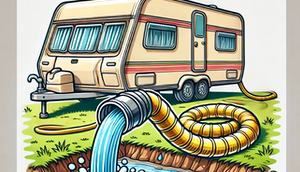
One thing that gets overlooked far too often is the hose. I'd say a good percentage of "bad tank taste" issues actually come from the hose people are using to fill up. Standard garden hoses just aren't designed for drinking water. They sit in the sun, they break down over time, and they leave a taste behind.
Switching to a proper drinking water hose can fix the problem instantly. It's a small change, but one of the most effective.
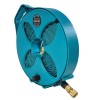
If you want something a bit more premium and easier to store, flat hoses on reels have become really popular as well.
Whichever hose you use, keep it capped when it is packed away, drain it before storage, and avoid leaving it full of warm water in the sun. That water is usually the first thing that goes into your tank next time.
Then there's the classic "plastic taste" you get, especially with new tanks or water that's been sitting in the heat. It is common, but it is not great to drink.
There are a few ways to deal with it, and one of the oldest tricks is red cordial. It sounds ridiculous if you haven't tried it, but plenty of caravan owners still swear by it. It is not guaranteed to fix every tank, but it is cheap and often worth trying before you give up on the system.
The usual method is to pour a bottle of cheap red cordial into the tank, fill the tank with water, then run each tap until the cordial mix has reached the lines. Let it sit overnight, drain the tank, then flush the tank and lines properly with fresh water. For large tanks, some owners use more than one bottle; the important part is that the mix reaches the plumbing as well as the tank.
If you'd prefer something purpose-made, there are also water fresheners designed specifically for this job.
If the cold tap tastes fine but the hot tap tastes awful, the problem may be in the hot water system rather than the main tank. Old water can sit in the heater, especially after storage, and some systems can pick up a stale or sulphur-like smell if they are not flushed.
Start by flushing the hot water system according to the heater manufacturer's instructions. Turn the power and gas supply to the heater off before draining or working around it, let hot water cool before opening drain points, and do not remove an anode, drain plug or pressure relief fitting while the system is hot or pressurised.
If the smell keeps coming back, check the heater manual for service items such as anodes, drain plugs and recommended cleaning procedure. If you are not confident working around the heater, use a caravan service agent.
At the end of the day, keeping your water tasting right isn't about one magic product. It's about a few simple habits working together. Keep your system clean, use the right hose, avoid letting water sit too long in the heat, and filter what you actually drink.
Once you've got that sorted, it becomes one of those things you stop thinking about altogether. You fill up, you pour a glass, and you just get on with enjoying where you are, which, realistically, is the whole point of it all.