
Nothing in cart
Excellent communication and service thank you
7th order by Geoffrey from VIC
Gas struts or springs are used in caravans and RVs for helping to lift and hold heavy things like the roof of a pop-top or an island bed for storage.
There are many types of gas struts and it is important to use the right one. This is a quick guide to help you choose.
The main things that vary between struts are the strength, the extended length and the compressed length. Other things that may be a choice are the shaft size and the ball joint size. The most commonly used ball joint on RVs is 10mm.
On this website we name our struts with a format like:
Gas Strut, 525mm > 305mm, 350N, 8mm Shaft with 10mm Ball Joint Ends.
| What To Check | Example |
|---|---|
| Extended length | 525mm, measured from centre of ball socket to centre of ball socket |
| Compressed length | 305mm, which is the extended length minus the stroke |
| Strength | 350N, which is about 35kg |
| End fittings | Common RV ball joint size is 10mm |

In the below example the uncompressed strut is 130mm. The position of the fixed end is around 130mm from the hinge point.
If the strut can compress by 50mm, then the moving end can be mounted up to 50mm from the hinge. The further away from the hinge point the less it will open, but the push will be stronger.
Do not try to compress a strong gas strut by hand. If you need to compress a strut for fitting, use a safe controlled method such as a suitable ratchet strap, and keep fingers clear of the sockets and brackets.


Ball joints and brackets of the same size are interchangeable. Sometimes your gas struts may be delivered from us with the ball joint pre-installed into the socket.
We are often asked how to remove the ball from the socket to enable the use of the brackets we offer. There can be black plastic ends with a metal surround that needs to be opened, or the spring steel retaining clip that is holding the ball firmly in place.
Carefully use a small prying tool. A small flat blade screw driver works best as you can twist the blade to remove the clip easily.
If you are replacing an existing strut, the strength in Newtons should be printed on the strut you have. If the old strut worked correctly, matching the printed length and Newton rating is usually the best starting point.
If the lid, mattress, roof load or storage load has changed, allow for the extra weight. For example, a heavier mattress may need stronger struts than the original island bed setup.
The easiest way to estimate the lifting weight required for a gas strut is to use a set of bathroom scales and a length of timber.
Pick the position where you think the gas strut will be located and place the timber and scales there. This will show you the weight that is being applied in that position. If for example the scales read 20kg then you need at least a 200N strut to hold the weight, because 20kg x 10 is about 200N.
Remember to take into consideration any extra weight such as a mattress. It is important to select the correct length of strut that will open to the desired height, but also allow the stroke to fully close.
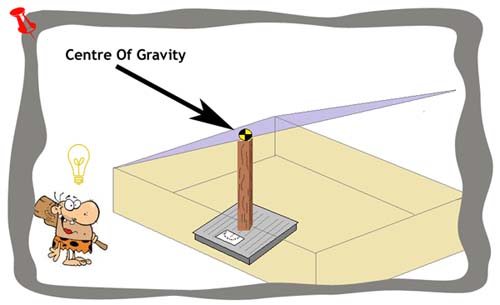
Pop-top roofs and custom lift systems are harder to calculate because the hinge points, scissor lifters, roof weight and number of struts all affect the result. If you are changing the original roof lift design, treat this guide as a starting point only and use an experienced repairer or engineer for the final setup.
For those who would like to try a more mathematical approach, the simplified calculation below can help estimate the gas strut force required for a hinged lid.
This is still only a guide. Real installations vary with bracket angle, hinge friction, lid shape and how much closing force you are happy with.
F1 = (G x XG) / (LS x A)
F2 = (A x F1 x LS) / Z
Z = length of lid from pivot (hinge) point in millimetres.
XG = centre of gravity in millimetres from the pivot point.
G = the weight of the lid in Newtons. 1kg is 9.8N, which can be rounded to 10N for this estimate.
LS = radius of gas spring force in millimetres.
A = number of gas springs per application. We recommend using two for most applications such as island beds.

Excellent communication and service thank you
Ordered wrong strut again have returned for credit will order hopefully correct part this time other than that geat service and prompt refund very appy
product as described. very fast shipping. just 3 days from order to delivery. highly recommended.